
Fayette Projected Versus Actual Release
TDCJ defines Projected Release Date as the date calculated by Classification and Records when a prisoner is expected to leave incarceration if parole does not occur sooner. The computation depends on the offense, offense date, sentence, eligibility, and applicable time credits. It may change. Scheduled Release Date is a later operational field that appears after release paperwork reaches Classification and Records and the audit is performed.
Actual release is the completed event shown by a release or discharge certificate. A parole eligibility date merely marks when review can become legally possible. A favorable vote opens a release path but may still require a program, plan approval, certificate processing, and audit.
Scheduled versus actual: Even a scheduled date can change without notice, including on that day. Only the completed government record confirms release.
A Fayette pretrial detainee has no sentence-based projected date. Bond, dismissal, plea, judgment, detainers, and court action govern that person's exit.
Find Fayette Projected Release Dates
First classify the custody. Fayette County Jail and TDCJ use different calculations and records. A blank TDCJ search says nothing conclusive about a county booking, while a county departure marked transfer may begin a TDCJ term.
- Confirm the last facility and whether a court imposed a county or TDCJ sentence.
- For TDCJ, use the official Inmate Search with a TDCJ or SID number when possible.
- Open the matching detail and distinguish Projected Release Date from Parole Review Information.
- Look for Scheduled Release Date and Location only after release processing advances.
- For county custody, request the judgment, jail-credit documents, and sheriff release record.
- Recheck close to the event and preserve the date of each lookup.
TDCJ's public locator focuses on people currently serving a TDCJ sentence. A fully discharged person may not remain searchable. Use the no-cost email information route or a formal public-information request for an old release certificate. For a county case, follow the Fayette release-record channels.
The official search fields appear on the TDCJ search.
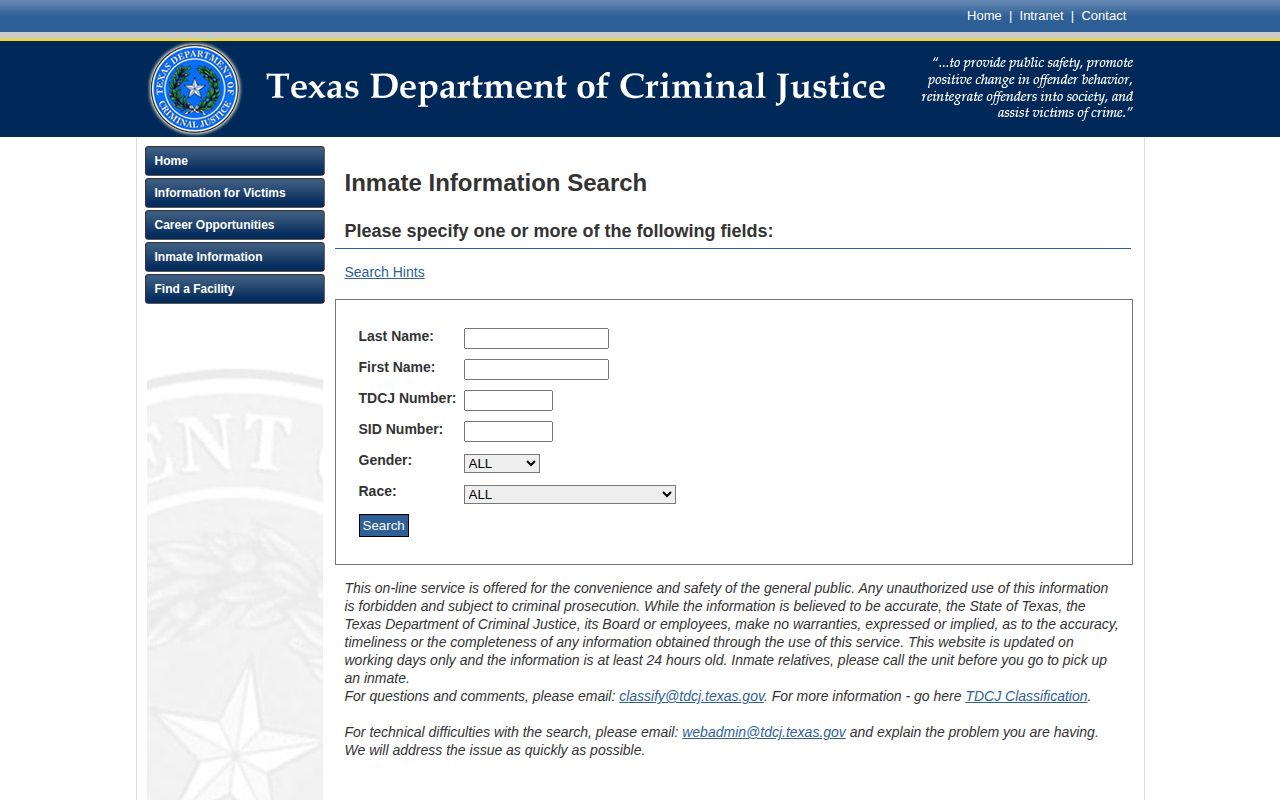
The screen shows the identifiers used to find the correct state-sentence record before reading its dates.
Texas Good Time for Fayette
Good-conduct time under Government Code Chapter 498 is a privilege tied to classification, conduct, work, and qualifying participation. It can be forfeited and may be restored under statutory rules. It generally affects parole or mandatory-supervision eligibility rather than shortening the court's sentence itself. No good time accrues while a person is out on parole or mandatory supervision.
Mandatory supervision differs by offense date. For an eligible pre-September 1, 1996 case, calendar time plus good time can reach the sentence under the older framework. For a qualifying offense on or after that date, the Board may deny discretionary mandatory supervision under section 508.149. A denial can move the projected date to maximum expiration or direct discharge; later approval can move it earlier.
Texas has no universal rule that every prisoner serves 85 percent. For serious offenses listed through Article 42A.054, the broadly applicable parole pattern can involve actual calendar time equal to half the sentence or 30 years, whichever is less, with statutory minimums and exceptions. Other offenses use different rules, and some are ineligible. Apply sections 508.145 and 508.149 to the exact offense date, title, sentence, and findings rather than a public calculator.
Why Fayette Release Dates Move
A projected date is a live forecast. Sentence records, Board actions, holds, and release processing can all alter it. A scheduled date is firmer but still not guaranteed.
| Factor | Possible effect |
|---|---|
| Good-time forfeiture or restoration | Changes an eligible calculation. |
| Sentence or jail-credit correction | Moves the time credited toward the term. |
| Parole or mandatory-supervision decision | Can open, delay, or deny a release path. |
| Detainer or receiving agency | Can turn a community exit into a transfer. |
| Required pre-release program | Delays release until the program condition is met. |
| Consecutive sentence or new case data | Changes the governing term or processing. |
| Certificate audit and plan approval | Affects scheduled date and location. |
Record the lookup date. TDCJ expressly warns that a Scheduled Release Date can change without notice. A family plan should not rely on a forecast alone.
Confirm Fayette Actual Release
Use a hierarchy: projected date, eligibility or review date, favorable vote, scheduled date and location, then the actual certificate or jail release record. Each answers a different question. For a TDCJ case, release-processing staff can clarify a favorable decision after the Board result, while the release certificate proves the completed event.
For a Fayette jail case, request the actual release date and time, release disposition, and receiving agency from the sheriff. A court order may explain the legal basis, but it may not show the jail's processing time. Subscribe through the VINELink Inmate Search, now Texas IVSS, for an alert and confirm it against the record.
Fayette Jail Release Calculations
Fayette County has published no local good-time policy, weekend-release rule, or release-date calculator. Do not import TDCJ formulas into a sentence served only at Fayette County Jail. The judgment and lawful jail-credit calculation may determine completion, while another hold can prevent release into the community.
Ask the District Clerk for felony judgment and credit documents or the County Clerk for a misdemeanor file. Then ask the sheriff for the completed booking-release record. If the disposition names TDCJ, ICE, another county, or a federal agency, describe the event as a transfer and follow that system.
Fayette Scheduled Release Location
TDCJ's Scheduled Release Date and Scheduled Release Location are operational fields. The agency says they appear after Classification and Records receives the release certificate and audits the calculation. Its guidance describes roughly 14 to 21 business days for that scheduling audit after receipt, while broader certificate processing may take four to six weeks in some cases. Each case differs.
The official explanation is available in the TDCJ parole release FAQ.
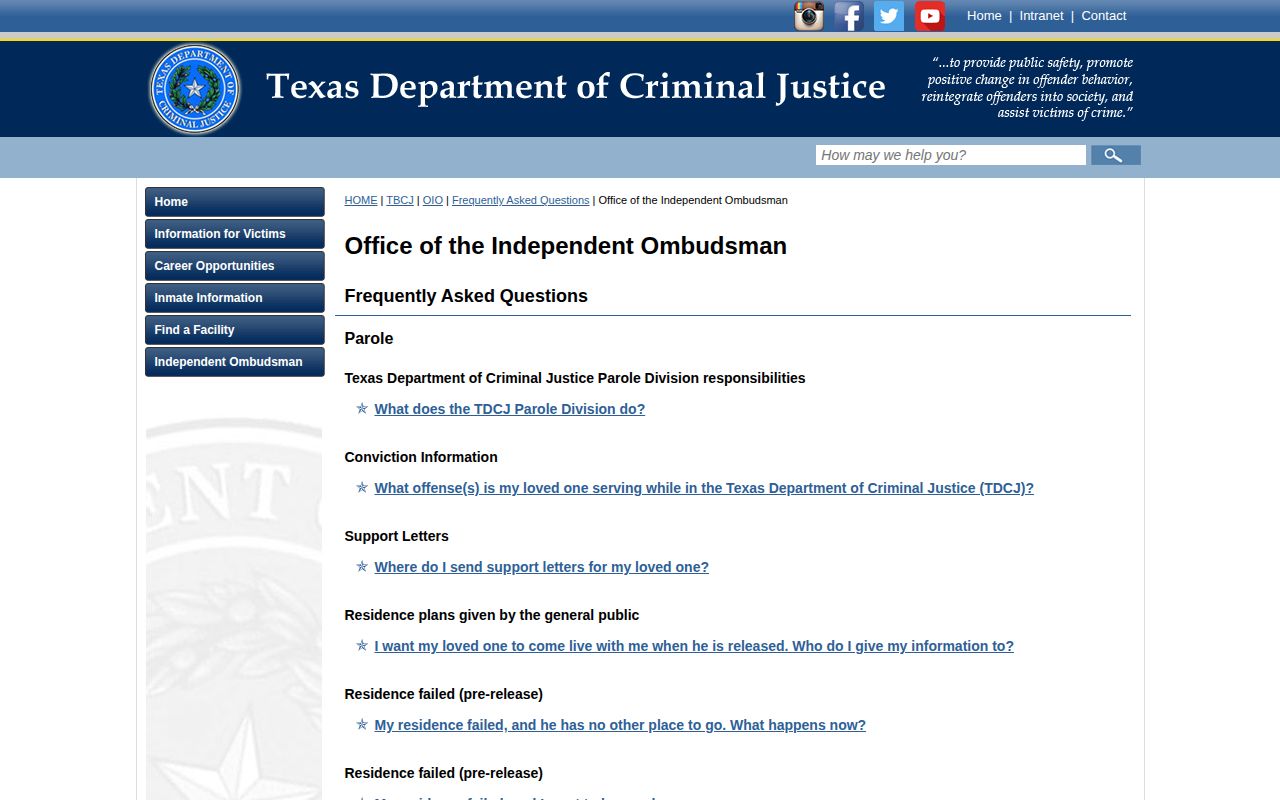
The captured source shows why a scheduled field is later and more operational than the projected forecast, yet still subject to change.
Fayette Release Date Evidence
A date should be labeled by what it proves. Projected Release Date is a forecast. Parole eligibility is a legal review opportunity. A Board vote is a decision, and some favorable FI votes require a named program before release. Scheduled Release Date and Location are operational plans. The sheriff release record or TDCJ certificate documents the finished event.
For an older TDCJ case that no longer appears online, request the public release or discharge certificate through the TDCJ Public Information Act channel. Give the full name, TDCJ or SID number if known, date of birth, and a narrow date range. The no-cost inmate-information email can return selected fields, but it does not replace a certified or formal record.
For Fayette County Jail, submit the sheriff's 2026 open-records form and select Booking Info. Ask for actual release date and time, disposition, and receiving agency. Texas Government Code Chapter 552 governs the request. The agency may release public portions, redact protected material, or seek an Attorney General ruling. The response process is not a promise that every record will arrive within ten business days.
Fayette Parole Dates Differ
Parole eligibility, panel review, and release are distinct. Texas does not publish a formal hearing calendar because panel members review and vote files individually. A denial sets a later review point. A favorable vote may carry conditions, and some FI-number decisions require a pre-release program. New discipline, protest, or case information can lead to reconsideration before release.
Check the person's Parole Review Information for the result. The Board status line at 844-512-0461 can provide case-specific status when the required identifiers are supplied. After a favorable decision, Review and Release Processing at 512-406-5202 addresses the next operational stage. Neither phone result replaces the eventual release certificate.
Eligibility under Government Code section 508.145 depends on the exact sentence and offense facts. Mandatory-supervision exclusions appear in section 508.149. A public estimate that ignores those facts can confuse the first possible review point with the date incarceration will end.
Fayette Release Date Terms
Several official fields sound alike. Maximum Expiration Date is the sentence endpoint before case-specific adjustments. Projected Release Date is TDCJ's forecast under the governing sentence and eligibility rules. Parole Eligibility Date marks when review may be possible. Scheduled Release Date and Location appear later in operations. Release or Discharge Date records what occurred after the event.
Mandatory supervision is not the same as parole, though both can involve community supervision. Direct discharge means the sentence ends without parole supervision. A detainer is a request or legal hold from another authority. It can prevent a planned community exit or cause a transfer. Consecutive sentences run one after another and can change which term controls the expected date.
These definitions matter for Fayette records. A sheriff entry that says transferred to TDCJ closes county custody but does not prove freedom from confinement. A favorable parole decision does not prove that TDCJ completed release. A scheduled location is a plan, not a certificate. Label each date with its official name and source, then state the lookup date so later changes can be understood.